


Preparing for an SBA 8(a) Annual Review: Records to Keep Organized All Year
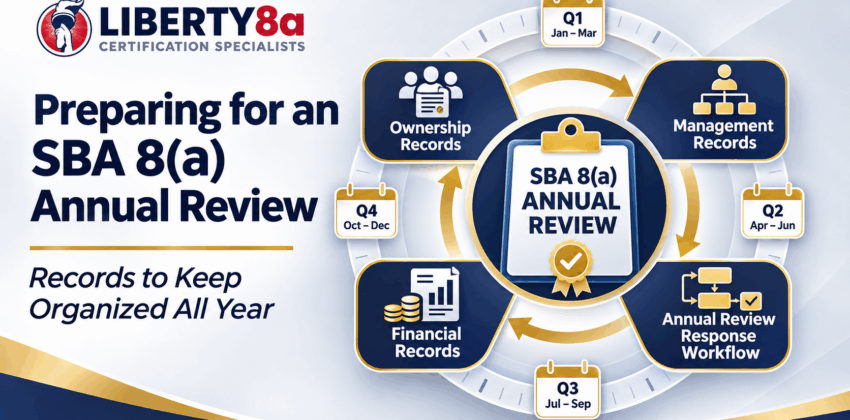
For businesses participating in the SBA 8(a) Business Development Program, staying organized is an ongoing responsibility. Important documents, financial information, and business records should remain accurate throughout the year.
SBA 8(a) annual review preparation becomes easier when businesses maintain their records continuously. Instead of collecting everything at the last minute, owners can build a reliable system for tracking and reviewing important information.
In addition, preparing early helps participants identify missing documents, resolve inconsistencies, and respond more effectively to SBA requests. This guide outlines practical ways to organize records before an annual review.
Why SBA 8(a) Annual Review Preparation Matters
Participation in the SBA 8(a) program involves continuing eligibility responsibilities. As part of the annual review process, participants must provide information required by SBA to support their continued participation.
However, the review is more than a paperwork exercise. It also provides an opportunity to check whether business records accurately reflect the company’s current circumstances.
For example, changes in ownership, management, finances, or business operations may affect the information a participant needs to report. Therefore, businesses should monitor significant developments throughout the year.
Understand Your Current SBA Requirements
Before preparing documents, review the instructions provided by SBA. Pay attention to the required materials, applicable deadlines, and designated submission process.
Additionally, consult the official SBA Business Certifications page for current program information. Do not rely only on an older checklist because requirements and procedures may change.

Maintain Business Records Throughout the Year
One of the most practical steps is to establish a secure central document repository. This may be a protected digital filing system with clearly organized folders.
For example, create separate folders for ownership records, financial statements, management information, business-development documents, and SBA communications.
Next, use consistent filenames that identify the document and its date. This makes it easier to locate the correct version when information is requested.
Create a Reliable Document Management System
A useful filing system should include a document index, appropriate access controls, and an established process for updating records.
In addition, restrict access to sensitive financial and personal information. Only authorized individuals should be able to view or modify confidential records.
Most importantly, do not wait until an annual review request arrives to begin searching for important documents. Regular organization can reduce last-minute confusion.
Keep Ownership and Management Records Current
Ownership and control are important considerations in the SBA 8(a) program. Therefore, participants should maintain accurate records explaining who owns the company and who manages its operations.
These records may include governing documents, ownership agreements, organizational records, management roles, and documentation of significant business changes.
For instance, changes involving company officers, ownership interests, or management responsibilities should be documented accurately. Where reporting or approval is required, businesses should follow the applicable SBA instructions.
Review Significant Business Changes
As the business grows, its organizational structure may change. Consequently, owners should compare current records with earlier submissions and identify information that needs updating.
Also, keep relevant corporate resolutions, amended agreements, and other supporting records when applicable. These documents can help explain changes during an official review.

Reconcile Financial Information Before Submission
Financial records are another important part of annual review preparation. However, collecting documents is only the first step. Participants should also review whether the information is accurate and consistent.
Depending on current SBA instructions, relevant records may include tax returns, financial statements, general ledgers, bank records, and supporting financial schedules.
First, confirm that business names, reporting periods, and document dates are correct. Next, compare financial amounts across related records.
If differences appear, investigate the reason and document the explanation. When necessary, ask a qualified accountant to assist with reconciliation.
Resolve Differences Without Changing the Facts
For example, an accounting report and tax return may show different figures because they use different reporting methods or adjustments. However, the reason for the difference should be understood and explained when relevant.
Never alter figures simply to make documents appear consistent. Instead, preserve accurate records and prepare legitimate supporting explanations.
Additionally, store financial documents securely because they may contain sensitive business information.

Organize Business-Development and Compliance Records
Besides ownership and financial documentation, businesses should maintain relevant operational and business-development records.
For example, keep appropriate records of contracts, business activities, company changes, and significant communications with government agencies.
Furthermore, review whether business information is consistent across SBA records, SAM.gov, company documents, and other applicable registrations.
Not every record will be required for every annual review. Therefore, use the current SBA request to determine what must actually be submitted.
Prepare an Organized Annual Review Response Workflow
When an SBA request arrives, the business should have a clear process for responding. This reduces the risk of missed items, inaccurate submissions, and unnecessary delays.
Step 1: Record the Request and Deadline
First, save the official communication and identify the required submission deadline. Then, record the requested documents in a tracking system.
Step 2: Assign Responsibilities
Next, designate a person responsible for collecting each document. Assign a reviewer to check the information before submission.
Step 3: Verify the Information
After collecting the records, compare them with the official request. Check dates, filenames, figures, and relevant business details for accuracy.
Step 4: Submit and Save Confirmation
Finally, use the submission method specified by SBA. Retain copies of the materials submitted, confirmation receipts, and any follow-up communications.
As a result, the business will have a clearer record of its annual review response.
SBA 8(a) Annual Review Preparation Checklist
The following checklist can help participants maintain organized records. It is a general preparation tool, not an official SBA submission checklist.
- Review current SBA annual review instructions and deadlines.
- Maintain a secure central document repository.
- Use consistent filenames and document dates.
- Keep current ownership and governing documents.
- Document significant management and business changes.
- Organize applicable financial statements, tax returns, and supporting schedules.
- Review important financial figures for consistency.
- Preserve relevant SBA notices and business communications.
- Assign a responsible person and internal review date for each task.
- Check that submitted information is complete and accurate.
- Save proof of submission and official responses.
- Seek qualified professional advice when legal, accounting, or eligibility issues are unclear.
Common Annual Review Preparation Mistakes
Waiting Until the Last Minute
Collecting records only after receiving a request can create unnecessary pressure. Instead, maintain important documents throughout the year.
Submitting Inconsistent Information
Conflicting dates, financial figures, or business details may require clarification. Therefore, review related records before submitting them.
Failing to Preserve Confirmation Records
Always retain copies of official responses and submission confirmations. These records help establish what was provided and when.
Key Takeaway: Stay Prepared Throughout the Year
Effective SBA 8(a) annual review preparation starts long before an official request arrives. By maintaining accurate ownership, management, financial, and business records, participants can reduce last-minute confusion.
Furthermore, clear task ownership and a reliable response process help businesses manage compliance responsibilities.
Ultimately, preparation should be ongoing. Verify current SBA instructions, maintain supporting evidence, and update business records whenever important circumstances change.
How LIBERTY8a Can Help
Preparing for an SBA 8(a) annual review can involve detailed documentation and careful coordination. Business owners may benefit from assistance understanding review instructions and organizing the required information.
LIBERTY8a offers 8(a) Annual Review Services to assist participating businesses with their annual review preparation.
To discuss your circumstances and available assistance, contact LIBERTY8a at (813) 784-0066 or visit the Contact page.
Call LIBERTY8a: (813) 784-0066
SBA determines certification and ongoing program eligibility. No consultant can guarantee approval, continued eligibility, or a government contract award.
Official Resources
SBA Business Certifications: Review official SBA certification and annual review guidance.
SBA 8(a) Program: Learn more about the 8(a) Business Development Program.
Editorial Review Date: November 20, 2026.
Editorial Disclaimer: This article provides general educational information and is not legal, tax, accounting, or government advice. Requirements may change. Verify current official instructions and seek qualified professional assistance for specific circumstances.