

8(a) Certification Is Only the Starting Point: Building a Federal Contracting-Ready Business
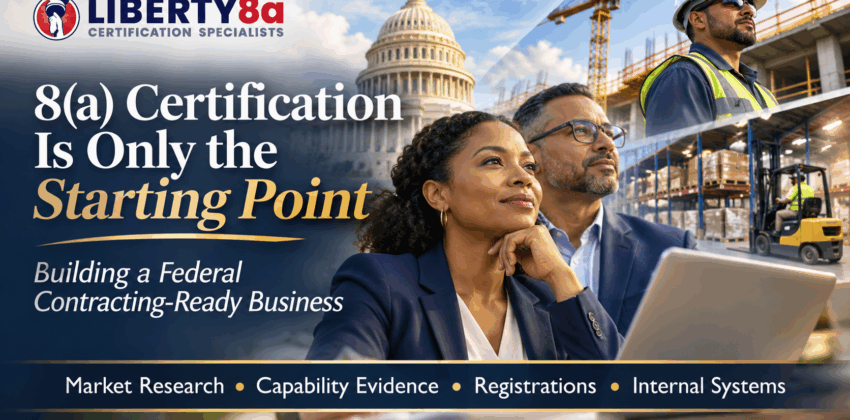
For small businesses entering the federal marketplace, earning SBA 8(a) certification is an important milestone. However, certification alone does not make a company ready to win and deliver government contracts.
8(a) federal contracting readiness requires more than completing an application. Business owners must understand agency needs, demonstrate their capabilities, and build reliable operating systems. They also need a realistic strategy for pursuing opportunities.
For this reason, certification should be viewed as the beginning of a broader business-development process. This guide explains the difference between certification and contracting readiness. It also outlines practical steps that small businesses can take before pursuing federal work.
Certification and Contracting Are Different Milestones
The SBA 8(a) Business Development Program helps eligible small businesses compete in the federal marketplace. For example, participants may gain access to certain set-aside and sole-source contracting opportunities. The program also provides business-development assistance.
However, 8(a) certification does not guarantee a contract award. Federal agencies must still have requirements that match the services or products a business provides.
In addition, a company must meet the terms of each applicable solicitation. It must also demonstrate that it has the resources, experience, and capacity to perform the work.
What Certification Does and Does Not Do
Certification can create access to certain opportunities. However, a successful contracting strategy requires businesses to turn that access into meaningful results.
- Certification: Establishes eligibility to participate in the SBA 8(a) program.
- Market research: Helps identify agencies and contracts that match business capabilities.
- Proposal preparation: Demonstrates how the company will meet a specific requirement.
- Contract performance: Shows whether the company can deliver the promised work.
Therefore, business owners should prepare for the responsibilities that may follow certification, rather than focusing only on application approval.

Focus on Work Your Business Can Deliver
Before pursuing government contracts, identify your company’s strongest services. Consider where your team has proven experience and which types of projects fit your resources.
Next, determine your preferred service area and realistic contract size. For example, a regional construction company may be better prepared for a smaller local project than a nationwide assignment requiring extensive resources.
Likewise, a technology business should focus on requirements that match its technical skills, staffing, and service capabilities.
Research Agencies and Contract Opportunities
Market research helps businesses understand where relevant federal opportunities exist. Start by identifying agencies that regularly purchase the products or services you provide.
Then, review current contract notices and available award information. Look for common requirements, contract sizes, performance locations, and competition patterns.
SAM.gov provides official federal contract opportunity information. Businesses can use it to research available opportunities and learn about entity registration requirements.
As a result, you can build a more focused pipeline. Instead of pursuing every available notice, prioritize opportunities that match your experience and resources.
Choose Opportunities Carefully
Not every federal contract will be suitable for your business. Before deciding to pursue one, review the scope, delivery schedule, location, and performance expectations.
Additionally, consider the cost of preparing a proposal and the resources needed to complete the work. A smaller but well-matched opportunity may support your long-term goals better than a much larger contract outside your capabilities.
Turn Business Capabilities Into Supporting Evidence
A strong capability statement should explain what a company does and why it can perform the work. However, general claims are not enough. Federal buyers also need reliable information about a business’s experience and qualifications.
Therefore, support your capabilities with clear and accurate records. These may include completed projects, customer references, relevant certifications, professional licenses, and measurable performance results.
Show Relevant Past Performance
Past performance can help demonstrate a company’s ability to complete similar work. For example, a business might describe a project it delivered on schedule, within the agreed scope, and to the customer’s satisfaction.
Whenever possible, include specific results. Explain the services provided, the responsibilities handled, and the outcome of the project.
If your company has no federal contracting history, you can still describe comparable commercial or state and local government projects accurately. However, do not present nonfederal work as federal past performance.
Document Your People, Equipment, and Processes
In addition to completed projects, consider the resources that support your operations. Depending on your industry, these may include staff credentials, specialized equipment, licenses, safety procedures, and quality-control processes.
For instance, a logistics company may highlight its inventory systems, delivery procedures, and operational capacity. Meanwhile, an engineering firm may emphasize technical qualifications, project controls, and relevant design experience.
These details help agencies evaluate whether a company has the capacity to perform a particular requirement.

Build Internal Systems Before Bidding
Winning a contract creates responsibilities that extend beyond the proposal. Businesses must also manage schedules, costs, communications, and contract deliverables.
For this reason, internal systems should be established before a company begins pursuing complex opportunities. Clear procedures help reduce confusion and improve accountability.
Create a Proposal Management Process
First, develop a proposal calendar that identifies important deadlines. Assign responsibility for reviewing requirements, preparing documents, checking pricing, and completing final submissions.
Next, establish a shared document repository. Keep commonly requested business information organized and up to date.
However, do not assume that a document accepted for one solicitation will satisfy another. Always review the specific instructions before preparing a response.
Review Pricing and Subcontracting Plans
Accurate pricing is another important part of government contracting preparation. Before submitting a proposal, evaluate labor, materials, overhead, travel, and other relevant costs.
Similarly, review potential subcontractors carefully. Confirm their qualifications, capacity, and ability to support the proposed work.
Where subcontracting is involved, businesses should also understand the applicable contract requirements and SBA limitations on subcontracting.
Track Deliverables and Performance
Once work begins, the company needs a method for monitoring progress. This may include project schedules, responsibility assignments, quality reviews, and customer communication procedures.
As a result, the business can identify problems early and make informed decisions about performance.
Keep Federal Registrations and Business Information Accurate
Federal contracting readiness also includes keeping business information current. For companies seeking to bid directly on federal awards, active registration in SAM.gov is generally required.
Therefore, review the business name, address, entity information, registrations, and other relevant details for accuracy.
In addition, check that the company’s marketing materials and capability statements use consistent information. Differences between records can cause confusion and may require clarification.
For current registration instructions, visit the official SAM.gov Entity Registration page.

Federal Contractor Readiness Checklist
Before pursuing a federal opportunity, use this practical checklist to evaluate your preparation. It is a general planning tool rather than an official government checklist.
Practical Steps Before Bidding
- Confirm the current official instructions and solicitation requirements.
- Identify agencies that purchase your products or services.
- Focus on opportunities that match your capabilities and realistic contract size.
- Review your SAM.gov registration and relevant business information.
- Prepare an accurate capability statement with supporting evidence.
- Organize completed projects, qualifications, licenses, and customer references.
- Assign responsible staff members and review dates for important tasks.
- Establish a proposal schedule and document management process.
- Review pricing assumptions and available resources.
- Screen subcontractors and review applicable contract requirements.
- Maintain systems for monitoring project milestones and deliverables.
- Seek qualified professional advice when legal, accounting, or eligibility issues are unclear.
After completing this review, identify the areas that need improvement. Then, develop a realistic plan to address those gaps before pursuing additional opportunities.
Key Takeaway: Certification Is the Beginning, Not the Finish Line
Successful 8(a) federal contracting readiness requires more than eligibility for a business-development program. Companies must also understand their target market, provide evidence of their capabilities, and maintain sound operating systems.
Additionally, businesses should pursue opportunities that fit their experience and resources. Careful planning can help reduce unnecessary costs and support more informed contracting decisions.
Ultimately, SBA 8(a) certification can be a valuable milestone. However, long-term contracting success depends on preparation, responsible management, and consistent performance.
How LIBERTY8a Can Help
Understanding SBA 8(a) certification requirements can be challenging. In addition, business owners may need assistance organizing documentation and evaluating their readiness for the application process.
LIBERTY8a provides certification assistance and related business support services. To learn more about the available services, visit our 8(a) Certification Assistance page or call (813) 784-0066.
Business owners can also explore other certification assistance services through LIBERTY8a.
Call LIBERTY8a: (813) 784-0066
Certification and contract award decisions are made by the relevant government authorities. No consultant can guarantee certification approval or a federal contract award.
Official Resources
SBA 8(a) Business Development Program: Review official program benefits and requirements.
Federal Contract Opportunities: Visit SAM.gov for official federal contracting information.
Entity Registration: Review SAM.gov registration instructions.
Editorial Review: November 16, 2026.
Editorial Disclaimer: This article provides general educational information and is not legal, tax, accounting, or government advice. Federal contracting requirements may change. Businesses should verify current official instructions and seek qualified professional guidance for specific circumstances.